The Maryland Lynching Memorial
“The gruesome nature of the lynching ritual act itself … becomes indelibly etched into the collective psyche of a Black community for generations.” — Sherrilyn Ifill, On the Courthouse Lawn
Between 1850 and 1950 more than 6,500 Black people were lynched in the United States; at least 38 of these murders were committed in Maryland.
Racial terror lynchings were grotesque, sadistic displays meant to intimidate Black communities and assert white supremacy. This history has been ignored or dismissed in the past and, even today, some at the highest levels of government would erase it altogether.
Efforts to suppress this brutal chapter from our nation’s memory are shameful and dangerous. This dark and difficult history must be acknowledged and confronted if we are to achieve a more just society and dismantle the apparatus of white supremacy, which fueled racial terror for more than 400 years and continues to function today.
To ensure the truth about Maryland’s history of racial terror is preserved and that memories of its victims are sanctified, the Maryland Lynching Memorial Project is creating a permanent, public memorial dedicated to the state’s 38 known and countless unknown racial terror lynching victims.
The form, structure and placement of the Maryland Lynching Memorial will be determined in a design competition open to visual artists nationally, although preference will be given to Maryland residents. The design process will be informed by a statewide community engagement initiative. The site of the memorial has not yet been determined, however there are certain qualities and features the memorial design should embody.
The memorial should solemnly recognize and pay homage to the victims who were savagely murdered, and to the families and communities who endured their loss and were terrorized by the killing. It should evoke the historic and continuing virulence of white supremacy and the suffering it inflicts. The memorial should acknowledge the values, enduring strength, resilience and dignity of African American people despite enduring centuries of terror. Finally, the Maryland Lynching Memorial should signal an understanding that while the threat of violence has not yet vanished, healing and reconciliation are imaginable and desired.
The Maryland Lynching Memorial will affirm the state’s leadership in national racial truth and reconciliation efforts:
In 2018, the Maryland Lynching Memorial Project was founded following a soil collection for Howard Cooper, a 15-year-old lynching victim murdered by a Towson mob in 1885. MLMP is the first state organization of its kind and helped create county coalitions in 14 of the 17 Maryland counties where these murders were committed;
In 2019, the Maryland Lynching Truth & Reconciliation Commission was created. The brainchild of Maryland House Speaker Joseline Peña-Melnyk and MLMP Vice President Dr. Nick Creary, it won unanimous bipartisan support in the General Assembly and is the first Commission of its kind in the US;
In 2021, based on research provided by MLMP, Governor Larry Hogan issued posthumous pardons to 34 of the 38 known Maryland lynching victims, allowing the state to acknowledge its failure to provide due process to victims murdered while in legal custody;
In 2024, in partnership with the Lewis Museum in Baltimore, MLMP created a permanent exhibit, Lynching in Maryland.The exhibit provides insight into the history and consequences of racial terror in the state and demonstrates how the legacy of lynching continues to be manifest in our lives. It invites visitors to find ways to help “bend the arc of the moral universe” toward justice;
In 2025, the Baltimore Symphony Orchestra (BSO) announced it is partnering with MLMP to commission a chamber work to honor and remember Maryland’s lynching victims. The piece will be premiered by BSO musicians at the dedication of the Maryland Lynching Memorial in the fall of 2027.
Building the Maryland Lynching Memorial is itself an act of reparative justice in which all Marylanders have a stake and will benefit. It is a public acknowledgment of the unspeakable horrors that were committed here, where we live. It allows us to recognize and mourn the victims of racial violence and, as Judge Margaret Burnham remarked at the 2025 MLMP Annual Conference, help “restore to them, their families and their communities the dignity that was stripped from them.” It creates a sacred space where we, as a community, can dedicate ourselves to healing, repair and reconciliation.
The Maryland Lynching Memorial has already garnered the support of a number of organizations and stakeholders, including: The Maryland Lynching Truth & Reconciliation Commission, the Caucus of African American Leaders, the Maryland Commission on African American History and Culture, the Montgomery County Lynching Memorial Project (LMP), the Carroll County Coalition of the MLMP, the James Taylor Justice Coalition (Kent County), the Southern Maryland Coalition of MLMP, the Douglass-Banneker-Tubman Museum, the Prince George’s County LMP and the Baltimore Symphony Orchestra.
We are living in perilous times. The truth about the history of racial terror is under attack. Truth itself is under attack. We are called to remember. “To forget the dead,” Elie Wiesel wrote, “would be akin to killing them a second time.” The Maryland Lynching Memorial will ensure that those who were lynched here will not be forgotten.
We owe it to the 38 Black men and children who were brutally lynched in this state not to forget. We owe it to the men and women whose lynchings have already been erased from memory. We owe it to their families and friends and neighbors who were terrorized by their murders and who lived in constant fear that they too could meet the same end. We owe it to the generations of Marylanders who accepted these horrors and did nothing, not to forget what they didn’t do.
And perhaps most importantly, we owe it to ourselves and to our children…. to embrace the responsibility that has been given to us. We can’t change the history we have inherited, and we can’t change the choices that were made by those who came before us. But we can’t turn our backs on it either.
Our responsibility today is to stand up and confront the history of racial terror in our state; to recognize and right the wrongs of the past; to expect justice for all, not just hope for it; and to do what we can as citizens and as a state to ensure that all our people can live their lives with dignity. The Maryland Lynching Memorial is a way we today can demonstrate our collective commitment to truth and reconciliation.
PROGRAM CHANGE: The Kick-Off Community Program Now Part of the 9th Annual MLMP Conference on October 24, 2026, 9:30-4:00
The Maryland Lynching Memorial Project will soon launch a nationwide contest to design a permanent memorial for the 38 known and countless unknown racial terror lynching victims in Maryland.
We invite all Marylanders to be a part of the process by engaging in an update and conversation at the 9th Annual "Lynching in Maryland" Conference on Saturday, October 24, 2026, at The Lewis Museum. Please visit the Conference Information and Registration Page to learn more and register.
During the Conference Session, we will share where we are in the journey and invite you to help shape this historic work. This event marks the kick-off for ongoing community conversations to help guide the Memorial project, ensuring the process creates space for community voices most affected by racial terror, preventing re-injury, and pursuing repair.
The Importance of Community Engagement
By Clory Jackson
Even as details of the memorial design and installation are being defined, it is important to begin an ongoing conversation with the broader community. This effort must particularly include descendants of lynching victims who wish to be part of this process, as well as coalition and community members who wish to support the truth and reconciliation work.
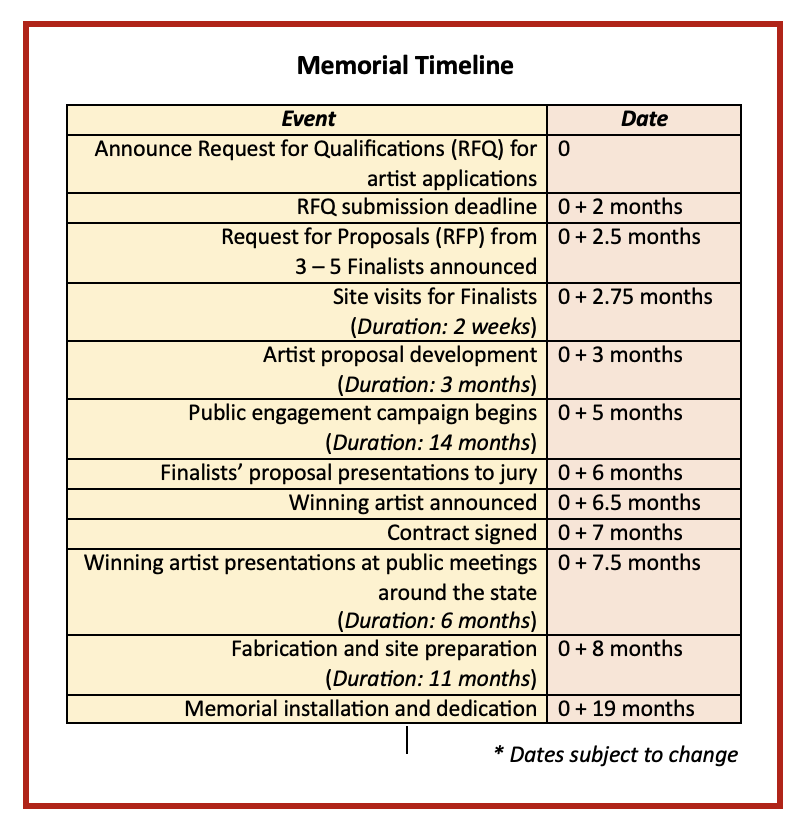
Planning is already under way for an official public launch of the community engagement effort. That meeting will be the first of many conversations to follow all over the state. Programs will be held throughout the design competition, selection and installation process. Meaningful and broad public engagement is a key marker of success and will be coordinated to recognize important competition phases and other project milestones,
In my role as community engagement coordinator, I’ll work with coalition leaders to coordinate dates to visit with each county coalition in-person or virtually to share updates, take questions, and gain insights to help shape a powerful and moving memorial that helps our state and country confront our past through a lens of truth that cannot be distorted.
While I have much to learn, experience has taught me that in order for repair to be sustainable and effective, it must be community-led. I hope to infuse this principle into the memorial work wherever possible as I work with all stakeholders.
Community Outreach and Memorialization
Foundational to the design process for the Maryland Lynching Memorial, is a robust schedule of community engagement programs, including live and livestreamed public forums and other media activity. The campaign will begin even before a design has been selected to maximize public interest in the project. It will be supported by an intense and ubiquitous media presence and will continue through the memorial installation and dedication.
The community engagement campaign will be aided by a network of MLMP affiliated coalitions in 14 of the 17 Maryland counties where racial terror lynchings occurred. The coalitions will help organize, promote and customize events in their respective communities.
Community forums will include presentations and discussions on racial terror in Maryland involving local experts, scholars and community leaders. Films and other media presentations will help illuminate this dark history. These programs will educate communities about their own history of racial terror and will argue that justice demands these killings are acknowledged and memorialized.
The community engagement campaign will be coordinated by Clory Jackson, who joined the MLMP Board of Directors earlier this year. Clory is the founder of The Brownsville Project and leads the Allegany County Truth and Reconciliation Committee.